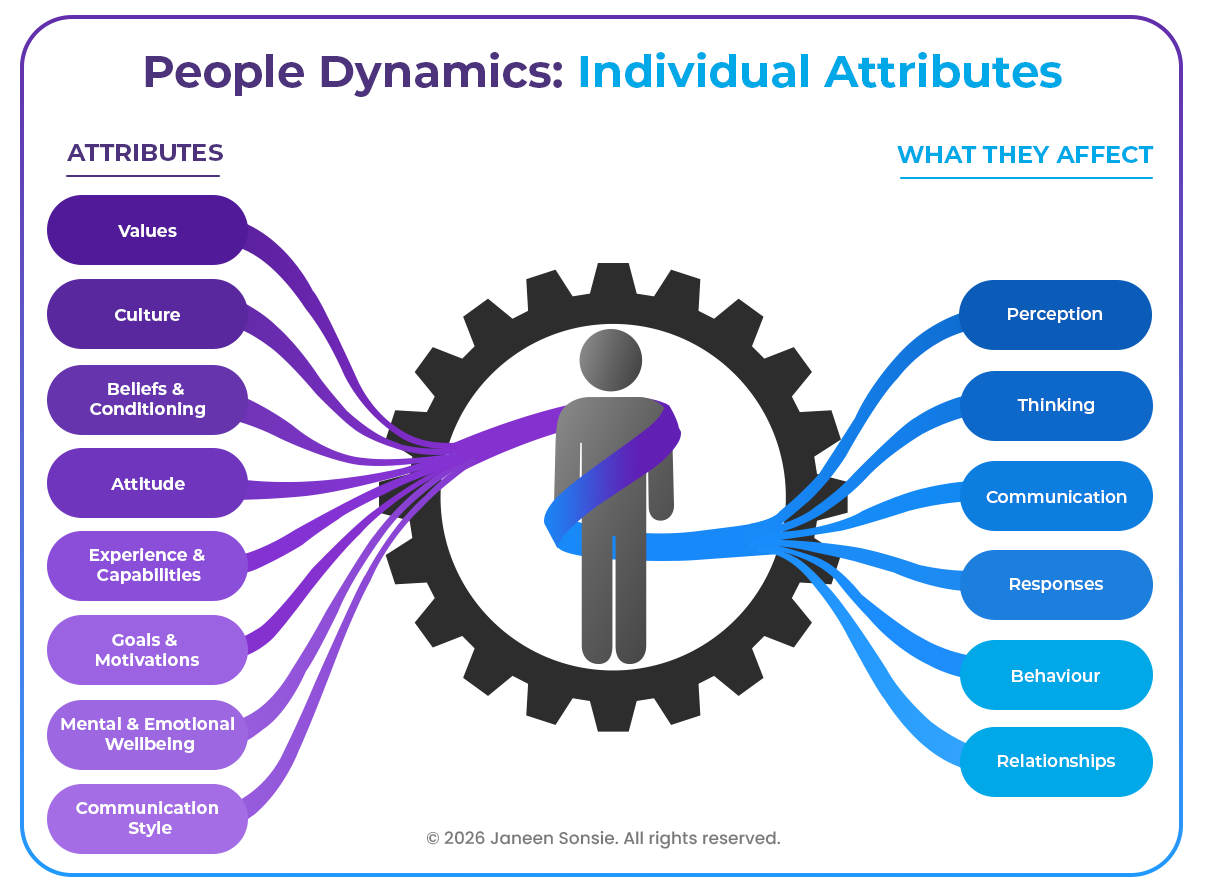
The way individuals communicate, interact and work with others creates the People Dynamics of the team.
Let’s go back to the analogy of your team being like a machine, with the team members as its components, each having their own attributes.
Research supports just how important the quality of that communication is. A meta-analysis of team communication and performance found a significant relationship between communication and team performance and, importantly, found that the quality of communication has a stronger relationship with performance than simply communicating more frequently.
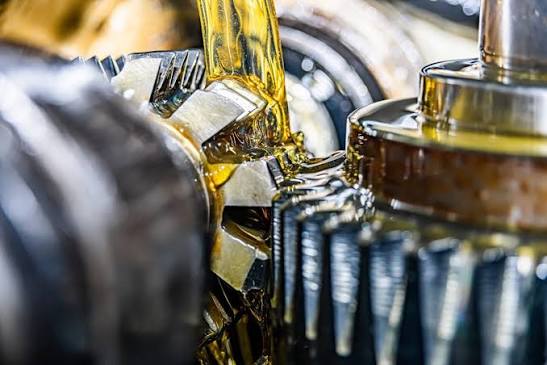
Good communication reduces friction. Poor communication increases it.
It helps people know what they are doing, what is expected of them and how to work effectively with others, enabling the team to work together smoothly. Poor, unclear, insufficient or absent communication increases friction between people and makes it harder for the team to work effectively together.
One of the key outputs of positive People Dynamics is increased engagement. As the state of the People Dynamics becomes more positive, people become more engaged and motivated and the team is better able to perform collectively.
While this research spans industries around the world, the implications are particularly relevant in yachting, where people live and work together in close quarters, often for long hours and under considerable pressure. The state of the People Dynamics affects how well the crew performs and has a significant impact on crew wellbeing and safety.
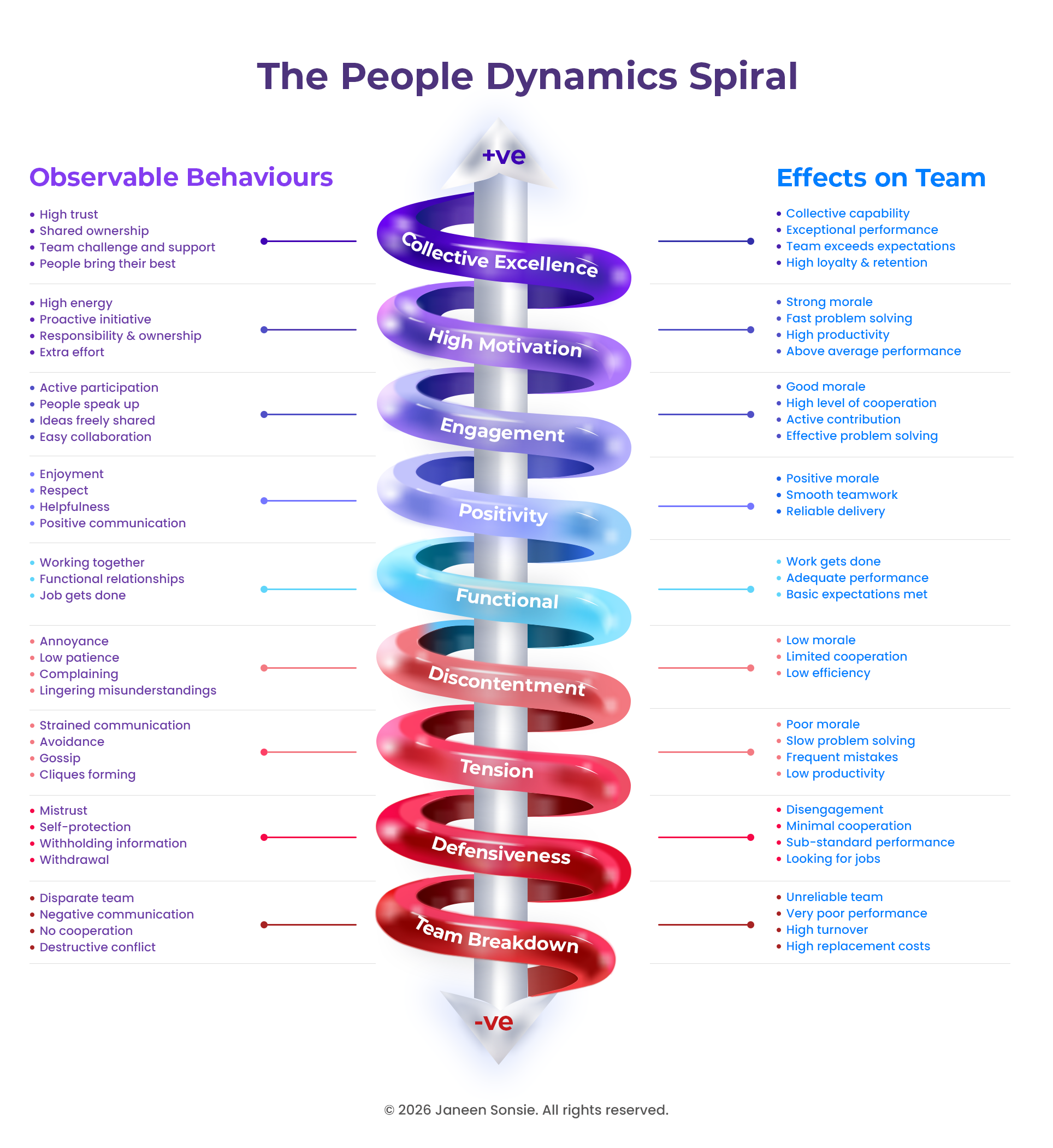
The state of your team’s People Dynamics can be seen in how people behave and the effect those behaviours are having on the team.
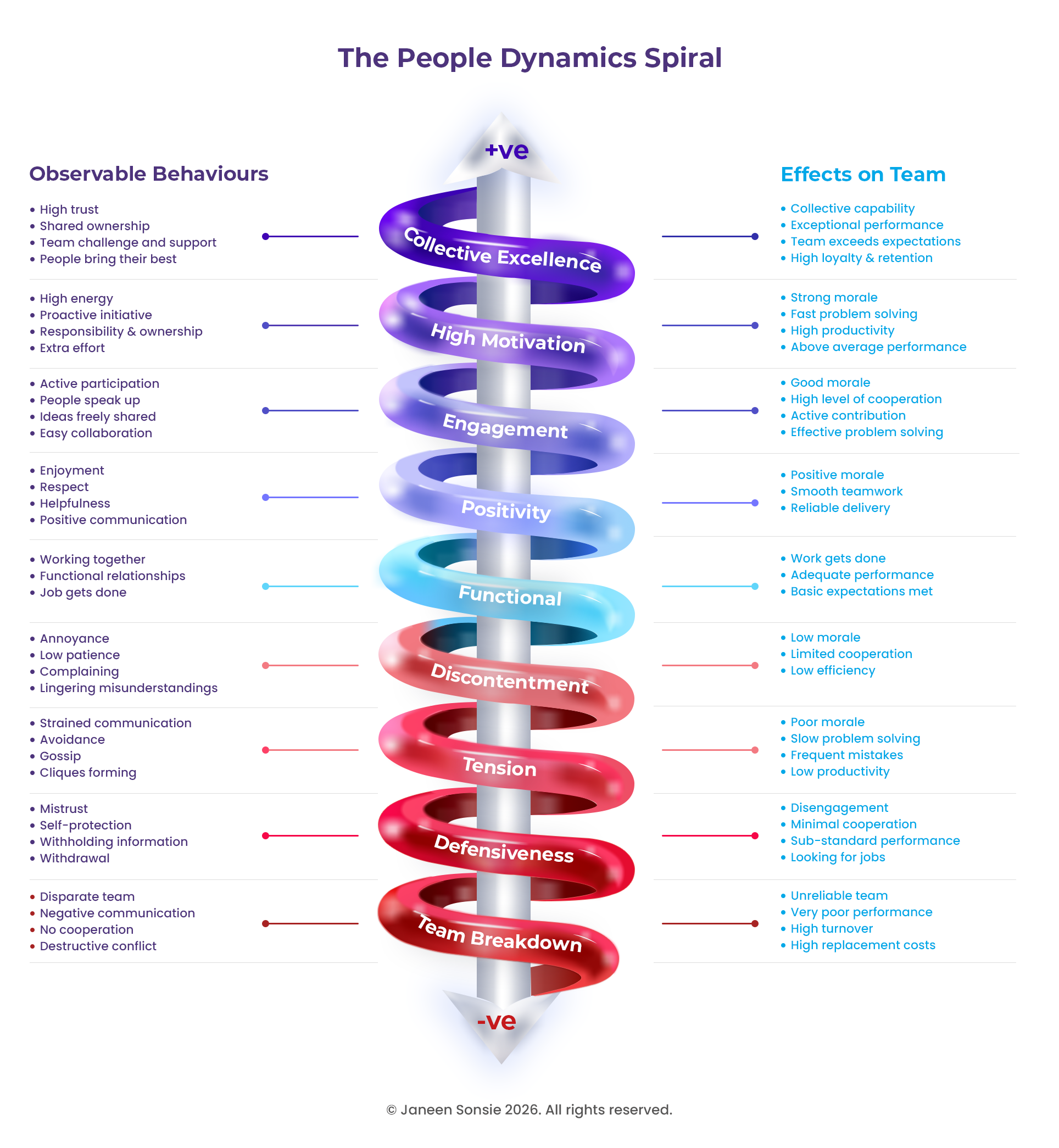
The People Dynamics Spiral shows the observable behaviours associated with each state and the effects they have on the team. Look at what is happening in your team now.
Whether you’re seeing the early signs of friction or dealing with more difficult team dynamics, I can help you understand what’s happening and what needs to change.
As the leader of a team, you are responsible for the quality of the work of your team, the performance of each person and the team collectively and the mental and emotional wellbeing of the people you lead.
That’s a significant responsibility, particularly in yachting where both the pressure and the stakes are high.
Understanding People Dynamics and the different attributes team members have helps you make sense of what is happening between people and what may be affecting how well they work together, rather than simply reacting to the behaviour you see.
You are responsible for the quality of communication within your team. That means leading by example, setting the standard for good communication and establishing how you expect people to communicate with you and with each other.
Well, I can help you develop those skills.
I work with leaders and teams to help create a more positive state of People Dynamics through leadership and communication training, team development and behavioural change coaching. I help people understand themselves and each other, recognise the impact they have on those around them and develop the communication and interpersonal skills they need to work together effectively.
I also use REACHLX behavioural profiling to give individuals and teams structured insight into their communication and behavioural preferences, helping them better understand themselves and each other.
When there are already problems within a team, I can help get people talking, understand what’s happening and help you resolve the problems that are contributing to a negative state of People Dynamics.
Don’t wait until there’s a major problem before paying attention to how your people are working together.
Curious about the People Dynamics in your team? Let’s talk about it.